
Cashew Nut Quality
In Vietnam, cashew trees are cultivated in various regions such as Binh Phuoc, Dak Lak, and Dong Nai, each with its distinct flavors and quality. In recent years, due to the rising global demand for cashew imports, Vietnamese businesses have been importing raw cashew nuts from Asian countries such as Cambodia and Indonesia, as well as from African countries like Tanzania, Côte d'Ivoire (commonly known as Ivory Coast in Vietnam), Ghana, and Guinea-Bissau. These cashews are highly regarded for their superior quality, attributed to natural advantages such as fertile soil and suitable climate for the growth and development of cashew trees.
With the availability of such raw cashew nuts in the market, it can be challenging for consumers to distinguish high-quality Vietnamese cashews. These cashews are often of significant value and are exported to numerous countries worldwide. In contrast to European, Asian, and some American countries where cashews are commonly consumed on a daily basis, identifying good and bad cashew products may not be as easy in Vietnam.
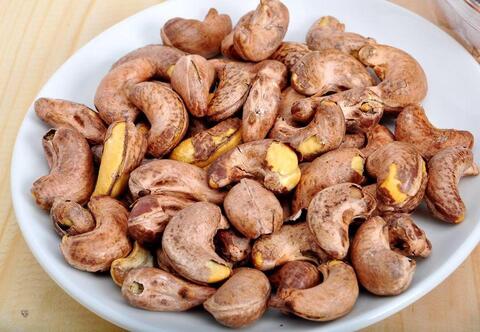
Cashew Nut Quality
First, observe the appearance: Cashew kernels from Binh Phuoc are typically large, well-balanced, and dense, resembling bread. The filling should be heavy, round, and smooth. In contrast, foreign cashews may be larger but often have wrinkles along the nut.
Second, observe the color: Premium salted roasted cashews have a vibrant, bright yellow color that is not burnt or dark yellow due to damage. The light yellow color should be uniform across all parts of the kernel.
Third, consider the smell of cashews: Freshly roasted cashews are preferred, and if processed and preserved well, they can last up to six months and have a shelf life of up to one year from the manufacturing date. Good cashew nuts should not be oily, which is an important criterion for buyers to consider when distinguishing between different types of cashews.
Fourth, consider the taste of cashews: High-quality cashew nuts should be dry, not wet or soft, and free from mold. They should be crispy and leave an unforgettable aftertaste, making them a delight to eat.
Fifth, consider salted roasted cashews: Vietnamese salted roasted cashews are typically thinner and easier to peel compared to foreign cashews, which is a distinguishing characteristic for those familiar with cashew nuts.
These are some ways to distinguish between good and bad cashews available in the market. For consumers seeking a reputable and high-quality cashew supplier, they can consider cashew nut lines produced using modern American technology and strict quality control, starting from the selection of cashew seeds to their care, harvesting, processing, and preservation.